
Last updated: August 2026
A continuous sump pump alarm means water in the pit has risen above the level the pump should be maintaining. Treat it as urgent, because the pit is filling faster than the pump is clearing it. An intermittent chirp with no water present usually means a battery-backup system's battery is low. Check the water level, power, float switch, and discharge line first, and if the water keeps rising, call a plumber the same day.
On this page:
The Five-Minute Check
What Each Alarm Sound Means
The 8 Reasons Alarms Go Off
Silencing and Resetting
Prevention, Lifespan, and Backup
FAQs
A sump pump alarm has one of the best jobs in your house: it speaks up before the water reaches your floor, not after.
But at 2 a.m., mid-thunderstorm, that shrieking box in the basement mostly raises questions. Is this an emergency? A dead battery? A false alarm?
Here's exactly how to tell. What each kind of alarm means, the five-minute check that finds the cause, how to silence and reset the thing, and the signs that this is a same-day plumber call rather than a maintenance note.
First, the Five-Minute Check
Do these in order. Most alarm calls resolve inside this list.
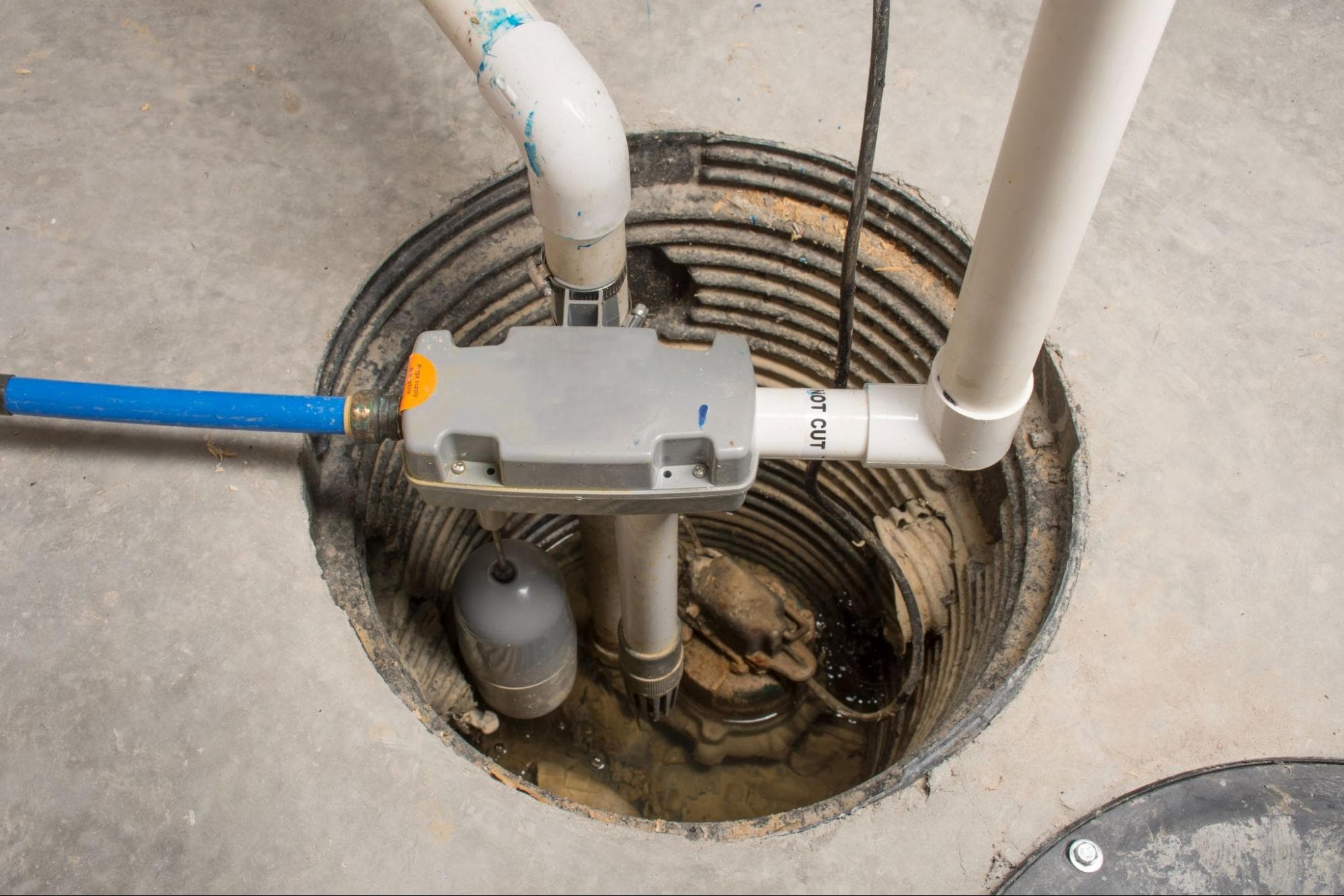
Look in the pit. Lift the lid and check the water level. High water confirms the alarm is doing its job, and starts the clock. Little or no water points to a low battery or a false trigger instead.
Confirm the pump has power. Is it plugged in fully, and not sharing an overloaded outlet? Check whether the outlet's GFCI has tripped and whether the pump's breaker is off. Reset once, deliberately. If the breaker or GFCI trips again, stop. Repeated tripping means an electrical fault, and repeatedly forcing it risks the pump and worse. That's a service call.
Check the float switch. The float that tells the pump to run can wedge against the pit wall, tangle in its own cord, or hang up on debris. If it's stuck, free it and see whether the pump starts.
Look at the intake screen. Gravel, silt, and debris clog the screen at the pump's base, choking flow until the pump can't keep up.
Check the discharge line outside. Find where the line exits and confirm water can actually leave. Mulch, leaves, soil washout, or a critter nest at the outlet will bottle up the whole system.
What Kind of Alarm Is It? (This Tells You Almost Everything)
Sump pump systems sound off for different reasons, and the pattern of the sound is your best diagnostic.
A continuous alarm: high water. Act now
The standard sump alarm is a high-water alarm: a sensor mounted above the pump's normal shut-off level that sounds when water reaches it. If it's going off continuously, the message is unambiguous. The water is higher than the pump should ever let it get, which means the pump is failing, overwhelmed, powerless, or blocked.
This is not a drill and not reassurance. It's your basement's smoke detector, and the response is the five-minute check above, followed by a same-day call if the level won't drop.
An intermittent chirp: usually the backup battery
If your system includes a battery backup and the sound is a periodic chirp, often with no water in sight, you're most likely hearing a low-battery alert from the backup controller. Important, but not an emergency in the moment.
The catch: a dying backup battery matters most precisely when a storm knocks the power out, so "not urgent" shouldn't become "ignored." Backup batteries typically serve three to five years. Test yours and replace on schedule.
A phone notification: smart monitors
WiFi-connected sump monitors push alerts for high water, power loss, and pump failure to your phone. They're enormously useful for basements you don't visit daily and homes you leave for vacation. If you got the alert remotely, have a neighbor check the basement or head home; high water doesn't pause because you're away.
So is it a false alarm?
Genuine false alarms are rare, but two impostors are common. The first is the low-battery chirp mistaken for a flood warning (check the pit: dry pit plus chirping equals battery). The second is a float-type alarm sensor that's slipped down its mount, triggering at normal water levels.
If the pit level is normal and the pump cycles properly when you test it, reposition the alarm sensor and you've likely solved it.
The 8 Reasons Sump Pump Alarms Go Off
Rain outrunning the pump. In a serious Georgia downpour, inflow can simply exceed a working pump's capacity. If the pump is running steadily and the level is still climbing, capacity is the issue. If this happens more than rarely, you're a candidate for a higher-capacity pump or a second pump.
Power loss. Storms cut power exactly when you need the pump most. Unplugged plugs, tripped GFCIs, and thrown breakers produce the same result on clear days. (One deliberate reset; repeated trips mean an electrician.)
A stuck float switch. The most common mechanical culprit. Floats jam against pit walls, snag cords, and wear out. A pump that runs when you lift the float by hand but not on its own has told you the diagnosis.
A clogged intake screen. Silt and gravel starve the pump until it can't move water fast enough to matter.
A blocked discharge line. Debris at the outlet, a crushed section, or (in cold snaps) a frozen line gives the water nowhere to go. Around Atlanta, debris and soil washout are the usual suspects rather than ice. Check the outlet after every landscaping project.
A failed check valve. The unsung one. The check valve keeps pumped water from pouring back down into the pit; when it fails, the pump re-pumps the same water in a rapid on-off cycle, wearing itself out while the level creeps up. Rapid-fire short cycling is the tell.
A failing pump motor. Humming without pumping, grinding, screeching, or silence: motors announce their retirement. Most residential sump pumps serve about ten years. Past that, an alarm is often the retirement notice.
A spent backup battery. The chirp scenario above, and the one item on this list you can fix with a shopping trip, if you catch it before the storm does.
Water still rising after the five-minute check? Stop troubleshooting — basement water damage compounds by the hour, not the day
Casteel's licensed plumbers (GA License MP210884) cover the greater Atlanta area with 24/7 emergency plumbing, including holidays, and no emergency, holiday, weekend, or after-hours fees, ever. The middle-of-the-storm call costs the same as the Tuesday-morning one. Call 770-852-8504 for peace of mind today.
How to Silence and Reset the Alarm
Once you know what triggered it, quieting the box takes a minute, with one rule: silencing is not solving.
Find the alarm unit, either a standalone float alarm mounted in the pit or the control box of a battery-backup system, and press its silence/test button.
On backup systems, a battery alert clears once the battery issue is addressed. Check that the terminals are clean and tight, give a maintainable battery its top-up, and know that a battery reading low right off the charger is finished. Replace it rather than resetting the alarm again tonight.
If a high-water alarm re-arms and sounds again after silencing, believe it. The water is back at the sensor, and the underlying cause is still live.
Staying Off This Page: Prevention, Lifespan, and Backup
The fifteen-minute quarterly ritual: pour a five-gallon bucket of water into the pit and watch. The float should rise, the pump should kick on promptly, the water should leave, and the pump should shut off without short-cycling. That single test exercises the float, motor, check valve, and discharge line at once.
Add an annual pit cleaning (scoop the silt and gravel, rinse the intake screen) and a discharge-outlet check each spring before storm season. Or fold all of it into an annual plumbing inspection and let us do the wet part.
Know the retirement signs: a pump that runs constantly or cycles rapidly, strange noises, visible rust, and struggling to keep up during ordinary rain. At the ten-year mark, replacement on your schedule beats failure on the storm's schedule.
And if you don't have a backup system, this is your sign. A primary pump alone means your basement's defense fails exactly when the power does. Battery backup pumps take over automatically in an outage and run for hours. Water-powered backup pumps (for homes on municipal water) use city water pressure to eject pit water: no battery to die and unlimited runtime, at the cost of higher water usage while running.
Which fits depends on your water service, your basement's stakes, and your storm patterns. Casteel's sump pump repair and installation team installs and services both, and will give you a straight recommendation rather than the expensive default.
Why Greater Atlanta Homes Trust Casteel
Casteel has served the greater Atlanta area since 1987: nearly 40 years of "Always On-Time, Guaranteed" service from fully licensed, background-checked technicians (GA Plumbing MP210884), backed by our Amazing Care and 100% satisfaction guarantees.
When the alarm goes off at the worst possible hour, we answer 24/7 including holidays with no after-hours fees. For everything short of an emergency, same-day service and our Comfort360 membership (15% off plumbing services) keep the basement boring, which is exactly how basements should be. Call 770-852-8504 or book online with Casteel's plumbing services today.
Frequently Asked Questions
Why is my sump pump alarm going off?
A continuous alarm means water has risen above the level your pump should maintain, caused by power loss, a stuck float, a clogged intake or discharge line, a failed check valve, a dying pump, or rain outpacing capacity. An intermittent chirp usually means a battery-backup system's battery is low.
How do I stop my sump pump from beeping?
Press the silence or test button on the alarm unit or backup controller, then fix the cause, because silencing doesn't solve anything. For battery chirps, clean the terminals and charge or replace the battery. A high-water alarm that re-sounds after silencing means the water is back at the sensor: keep troubleshooting or call.
Does a sump pump alarm mean my basement is going to flood?
It means flooding has become possible and the clock is running. The alarm sounds while the water is still contained in the pit, giving you time to act. Work the checks: power, float, intake, discharge. If the level keeps rising despite them, a same-day plumber call is what stands between the pit and your flooring.
Why is my sump pump alarm going off when there's no water?
A dry pit plus periodic chirping is the classic signature of a low battery on a battery-backup system, not a flood warning. Less commonly, an alarm sensor that's slipped down its mounting triggers at normal levels and needs repositioning. Either way, confirm the pit is truly dry and test the pump before ignoring it.
How often should a sump pump run?
Only when water in the pit reaches its float: frequently during storms and wet seasons, rarely in dry stretches. What's abnormal is constant running or rapid on-off cycling in dry weather, which points to a stuck float, a failed check valve letting water flow back, or rising groundwater. All are worth diagnosing before storm season tests them.
Do I need a battery backup sump pump?
If your basement is finished, stores anything you value, or your area loses power in exactly the storms that fill sump pits: yes. Battery backups run for hours through an outage; water-powered backups (on municipal water) offer unlimited runtime with no battery to maintain. Either turns a power outage from a flood risk into an inconvenience.
Related Articles
What do you need help with today?
Heating
No heat, strange smells, rising bills? We repair and replace heating systems to keep your home reliably warm.
Air Conditioning
AC blowing warm air? Uneven cooling in your rooms? We fix cooling issues fast and keep your system running smoothly all summer.
Plumbing
Our highly trained plumbers handle it all, from leaky faucets to full system installations and repipes.
Electrical
The smartest team in town. You need repair, installations, wiring, inspections, lighting — you name it.