
Does HVAC Brand Actually Matter? What Decides How a System Performs in Metro Atlanta
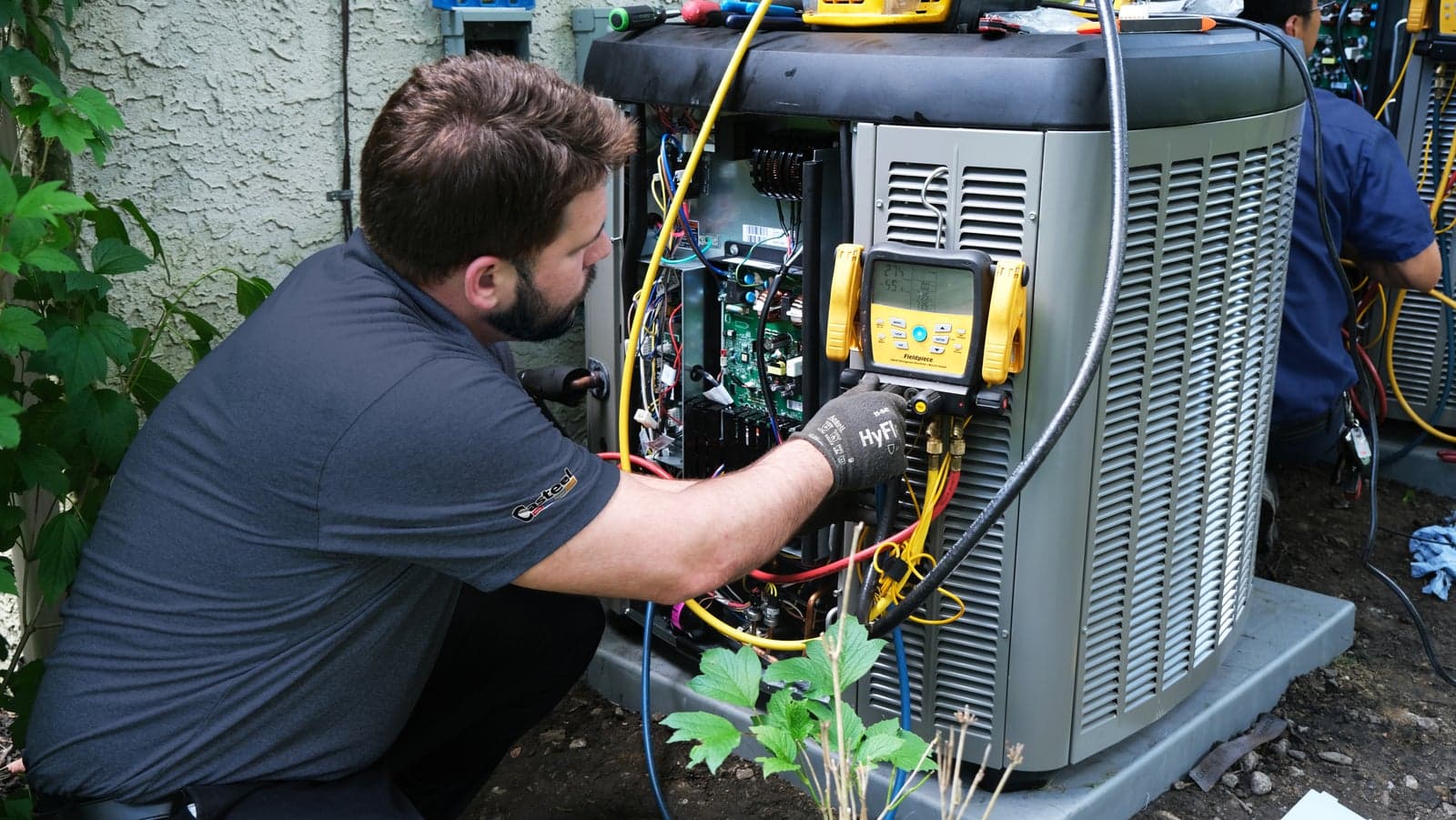
Quick answer: Brand matters far less than most buyers expect. Across the systems we service in the greater Atlanta area, what decides whether a system is quiet, efficient and long-lived is correct sizing, install and commissioning quality, duct condition, whether the warranty gets honored locally, and whether parts are on a truck nearby. Two identical units installed by two different crews will not perform the same.
On this page:
The five factors that outrank brand
Single stage, two stage and variable speed
Replacing just the outdoor unit
Heat pump or straight AC in Georgia
Ducted or ductless
What we install, and why we are telling you
FAQs
Almost every replacement conversation starts with a brand question, and almost none of them should.
It is an understandable place to start. Brand is the one variable a homeowner can research alone at eleven at night, and the internet is full of confident verdicts about it.
The problem is that the variable you can research alone is the one with the smallest effect on the outcome. The ones that decide how the system actually performs are invisible from a spec sheet, and they are all decided on install day.
The Five Factors That Outrank Brand
In the order they matter, and all five sit above the badge on the condenser.
Sizing
An oversized system cools the air fast, satisfies the thermostat, shuts off, and never runs long enough to pull moisture out of the house. In a humid climate that is the single most common cause of a home that is cold and clammy at the same time.
Sizing comes from a Manual J load calculation, not from the tonnage stamped on the old unit. Getting it wrong costs you comfort every day for fifteen years and shows up on no spec sheet anywhere.
Install and Commissioning Quality
Refrigerant charged to the manufacturer's specification, a measured static pressure, a verified temperature split, a line set properly brazed and evacuated to remove moisture and non-condensables.
These are the difference between a unit that meets its rating and one that quietly does not. A system can run for years while delivering less capacity and worse efficiency than the label promises, and nothing about it will look broken.
Duct Condition
Leaky, crushed, undersized or badly routed ducts cap what any equipment can deliver, no matter what it cost. A high-efficiency system pushing air through an attic duct run that leaks a quarter of it is an expensive way to condition an attic.
In most metro Atlanta homes, money spent on ducts outperforms the same money spent on a higher efficiency tier.
Warranty Honoring
A manufacturer parts warranty is only worth something if a local contractor will register it on time, file the claim and get the part. Registration windows are short and missing one can shorten your coverage substantially.
Ask who does that where you live, and ask before you sign rather than after a compressor fails.
Local Parts Availability
When a control board fails in August, the only question that matters is whether that board is on a truck in Cobb County today or on a pallet three states away.
This is where brand does have a real, measurable effect, and it is almost the opposite of the effect people expect. A widely-stocked line beats a prestigious one that nobody nearby carries.
What Actually Decides Each Choice
A quick way to see where brand does and does not belong in the decision.
The decision | What actually decides it | How much brand matters |
Will the house feel comfortable | Sizing and duct condition | Very little |
Will it hit its efficiency rating | Matched pair, charge, airflow, commissioning | Very little |
Will it control humidity | Correct sizing and staging or variable speed | Some, through available staging |
Will it be quiet | Compressor type, staging, placement, line set routing | Some |
How long will it last | Install quality, maintenance, correct sizing | Little |
How fast can it be fixed | Local parts stocking and technician familiarity | A lot |
Will the warranty be honored | Registration and the contractor filing the claim | Some, through warranty terms |
What will it cost to own | Efficiency tier, duct leakage, utility rates, maintenance | Little |
Single Stage, Two Stage and Variable Speed
This choice affects daily comfort more than brand does, and it is the one most people never get explained to them.
A single-stage system runs at full output or not at all. It is simple, it is the least expensive to install, and it cools by overshooting and shutting off.
A two-stage system adds a low setting that covers most of the season. It runs longer at lower capacity, which is quieter, more even, and removes considerably more moisture from the air.
A variable-speed system modulates continuously, holding a steady output that matches the load. It gives the best humidity control and the most even temperatures, which is why it is usually the right answer for a two-story house where the upstairs runs warm.
The caveat is real. Variable-speed equipment is less forgiving of bad ductwork and sloppy commissioning than single-stage equipment, so it can underperform a cheaper system in a house with bad ducts. Buy the ducts first.
Replacing Just the Outdoor Unit
Sometimes defensible, more often not, and worth understanding before someone offers it to you as a saving.
An outdoor unit and an indoor coil are engineered, tested and rated as a matched pair. The efficiency and capacity on the label describe that pair, not the condenser on its own.
Put a new condenser on an old coil and you can end up with a system that delivers neither the efficiency nor the capacity you paid for, and the mismatch can complicate warranty coverage. There is a refrigerant dimension to it now as well, since current equipment uses R-454B or R-32 rather than R-410A and those are not interchangeable in an existing coil.
It is worth considering when the indoor coil is genuinely recent, is a listed match for the new outdoor unit, and the refrigerant is the same. It is rarely worth it when the coil is the same age as the condenser that just failed.
Heat Pump or Straight AC in Georgia
For most metro Atlanta homes, a heat pump is the better answer, and the climate is the reason rather than any efficiency fashion.
Winters here are mild enough that a heat pump carries the great majority of the heating season at high efficiency, and you get cooling from the same equipment. Modern systems hold useful capacity well below the temperatures a Georgia winter typically delivers.
Keeping natural gas still makes sense in specific cases: where you already have gas service, where the existing furnace has real life left, or where you want gas heat available during a hard cold snap.
All-electric is not automatically cheaper to run. It depends on your electricity and gas rates and on how well the house holds heat, which is another envelope question rather than an equipment question. Our heat pump systems page covers the equipment side.
Ducted or Ductless
Ducted heat pumps remain the better whole-house answer wherever usable ductwork already exists, because one system and one control deliver even temperatures across the house.
Mini splits win where ducts do not go: additions, bonus rooms over garages, converted attics and basements, sunrooms, and houses that never had ducts at all. They also let you condition one problem room without touching the rest of the system.
A whole-house multi-head retrofit in a home that already has ducts is usually more expensive than repairing the ducts and keeping a ducted system. Window units are only a reasonable answer for a small home you do not plan to keep long. See ductless mini split systems for where they fit.
What We Install, and Why We Are Telling You
You should know what a contractor sells before you weigh their opinion on brands, so here is ours.
Casteel installs Daikin and Rheem heating and cooling equipment. Across our generator, plumbing and water treatment work we install Generac, Laars, Zoeller, WaterTech and Lancaster Water. Those are our preferred brands.
We service all major brands, including Carrier, Trane, York, Bryant and Rheem, so the systems described in this article are ones we work on every week.
We are not a Trane, Carrier or Lennox dealer. That means we have nothing to gain from a verdict in that matchup, and it is also why you will not find one on this page. Those three all build equipment perfectly capable of handling a metro Atlanta summer, and so do several lines nobody argues about online.
Ask any contractor what they sell before you ask them which brand is best. The answer to the second question is usually contained in the answer to the first.
Why Choose Casteel for a System Replacement
Everything above is an argument that the install decides the outcome, which is a fair standard to hold us to
Casteel sizes replacements from a load calculation rather than from the old nameplate, commissions with measured airflow and static pressure, and gives you the readings. Our air conditioning services team works across the greater Atlanta area, dispatching into Cobb County from Marietta and into Gwinnett County from Lawrenceville.
If your ducts are the limiting factor, we would rather tell you that than sell you a higher efficiency tier that cannot deliver. Free in-home estimates are available for AC replacement.
Call 770-852-8504 to book one.
Does HVAC Brand Matter FAQs
The brand-versus-brand questions we get asked most, answered without a verdict we are not qualified to sell you.
Trane vs Carrier vs Lennox for brutal summer heat, which is best?
All three build equipment capable of handling metro Atlanta summers, and the gap between them is smaller than the gap between a good and a bad installation. Sizing, duct condition and commissioning decide performance. We install Daikin and Rheem and service all major brands, so we have no stake in that matchup.
Single stage vs two stage vs variable speed central AC, what is the difference?
Single stage runs at full output or off. Two stage adds a low setting that covers most of the season, runs longer and removes more humidity. Variable speed modulates continuously for the most even temperatures and the best moisture control. Higher stages are also less forgiving of poor ductwork.
Should I replace just the outdoor unit or the whole system?
Replace both, unless the indoor coil is genuinely recent, is a listed match for the new condenser and uses the same refrigerant. Outdoor units and coils are rated as matched pairs, so mismatching them can cost you the labeled efficiency and capacity and can complicate warranty coverage.
Heat pump vs traditional AC when replacing in Georgia, which is smarter?
A heat pump for most metro Atlanta homes. Winters here are mild enough that it carries the heating season efficiently while providing cooling from the same equipment. Keeping a gas furnace paired with AC makes sense where you already have gas service and the furnace still has useful life left.
Ducted heat pump versus mini splits for a whole house?
Ducted wins where usable ductwork already exists, because it delivers even temperatures with one system and one thermostat. Mini splits win for additions, bonus rooms over garages, converted spaces and homes with no ducts at all. A whole-house multi-head retrofit usually costs more than repairing the ducts.
All electric HVAC versus keeping natural gas, which is cheaper long term?
It depends on your utility rates, your insulation and how much of the heating season is genuinely cold. In metro Atlanta a heat pump handles most of the winter at high efficiency, which narrows the gap considerably. Gas keeps an advantage during hard cold snaps and where service is already installed.
Related Articles
What do you need help with today?
Heating
No heat, strange smells, rising bills? We repair and replace heating systems to keep your home reliably warm.
Air Conditioning
AC blowing warm air? Uneven cooling in your rooms? We fix cooling issues fast and keep your system running smoothly all summer.
Plumbing
Our highly trained plumbers handle it all, from leaky faucets to full system installations and repipes.
Electrical
The smartest team in town. You need repair, installations, wiring, inspections, lighting — you name it.