
Gas Smell or CO Alarm at the Furnace? What to Do First, and Who Clears the System Afterward
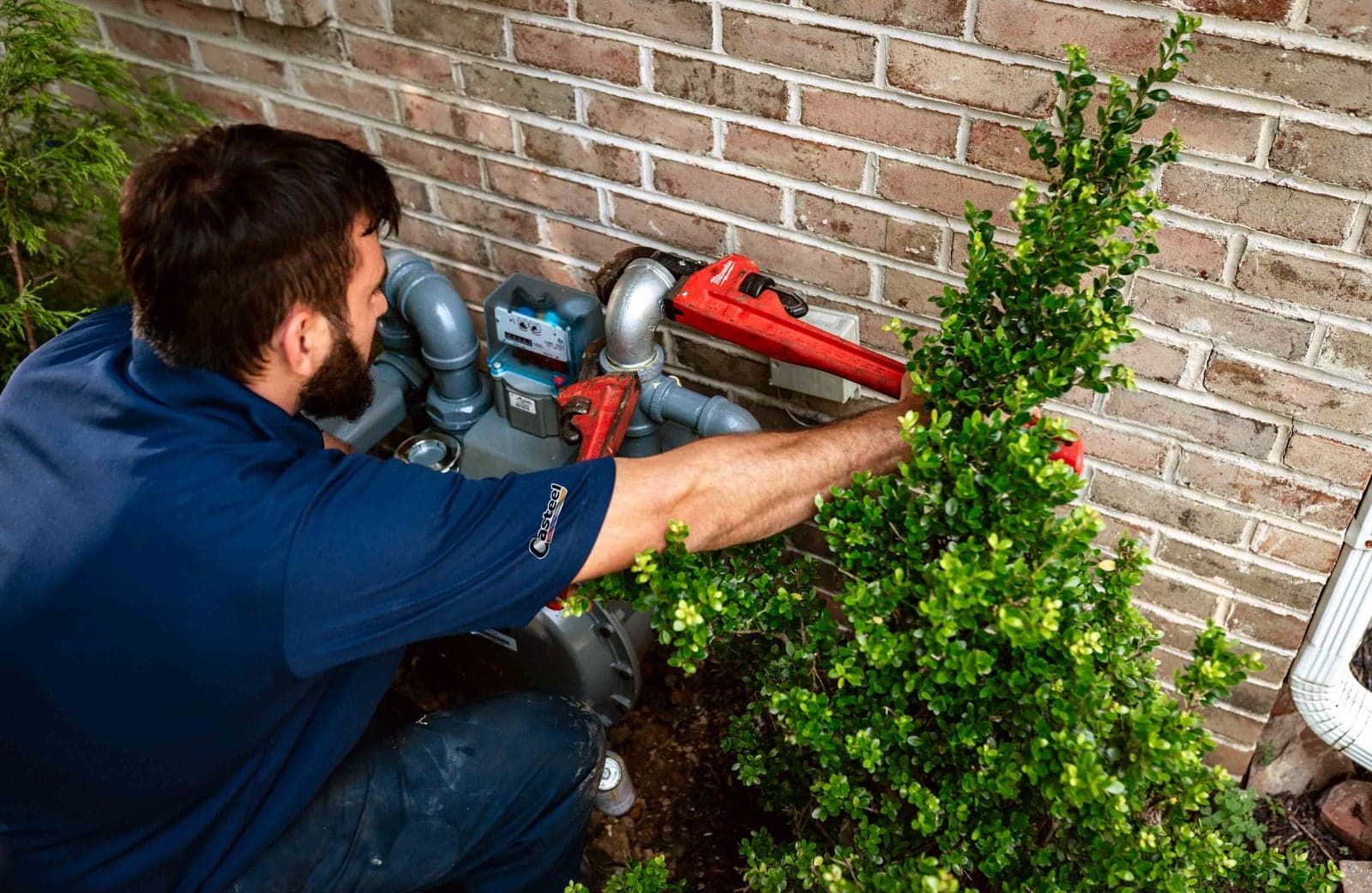
Quick answer: If you smell gas or a carbon monoxide alarm is sounding, leave the house first, then call 911 or Atlanta Gas Light at 877-427-4321 from outside. Do not flip switches, use a phone indoors or look for the source. Do not go back in until the fire department or the utility clears the house. Only then does a licensed technician inspect, test and clear the furnace itself.
On this page:
Do this right now
Gas smell and CO alarms are different emergencies
Who clears the house, and who clears the system
What the safety inspection actually checks
Smells that are not a gas leak
What you can do, and what needs a technician
FAQs
Two things happen in a metro Atlanta house on a cold night, and they are not the same emergency even though they feel identical at two in the morning.
One is the smell of gas near the furnace closet. The other is a carbon monoxide alarm going off with nothing to smell at all.
Treat both situations in the same way: leave and call the authority from outside. What changes is who has jurisdiction, what gets tested, and how long it takes before anyone can safely run the heat again.
Do This Right Now.
Read whichever block matches what is happening. Then act on it before you read anything else on this page.
If You Smell Gas
Leave the building immediately, and take everyone and every pet with you.
Do not flip any switch on or off, do not unplug anything, and do not use a phone, a garage door opener or a light switch inside the house. Any of those can create a spark.
Do not try to find the leak. Shut off the gas at the meter or open windows on your way out. Leaving is the whole job.
From outside and well away from the house, call 911, or call Atlanta Gas Light at 877-427-4321. Atlanta Gas Light publishes that line for suspected leaks and responds around the clock at no charge, whoever your gas marketer is.
Stay outside. Do not re-enter for any reason until the fire department or the utility tells you the house is safe.
If a Carbon Monoxide Alarm Is Sounding
Get everyone and every pet outside into fresh air first. Count heads.
Call 911 from outside. If anyone is dizzy, nauseated, confused, unusually sleepy or has a headache that improves in fresh air, say so on the call. Those are the symptoms of carbon monoxide exposure and they need medical attention, not ventilation.
Do not go back in to open windows, to silence the alarm or to look for the source. Carbon monoxide has no smell and no color, and you cannot tell by standing in it whether the level is falling.
Leave the alarm where it is so responders can read it.
Wait for the fire department to measure the air and tell you the house is clear.
Gas Smell and CO Alarms Are Different Emergencies
People treat these as one problem because both involve the furnace and both happen at night. The distinction matters because it changes what the responder is looking for.
Natural gas is odorless on its own. Utilities add mercaptan, the sulfur compound that produces the rotten-egg smell, specifically so that a leak announces itself. If you can smell it, unburned gas is escaping somewhere between the meter and an appliance, and the hazard is fire or explosion.
Carbon monoxide is the opposite problem. It is a byproduct of combustion that already happened, it has no smell, and the hazard is poisoning rather than ignition. A CO alarm sounding usually means an appliance is burning fuel incompletely or is not venting the way it should.
A cracked heat exchanger, a blocked flue, a bird nest in a vent termination, a back-drafting water heater and a car left running in an attached garage can all set off the same alarm. So the fire department checks the whole house, not just the furnace.
Who Clears the House, and Who Clears the System
The fire department and the gas utility clear the house. They find and stop an active leak, shut off gas service at the meter if they need to, ventilate, measure the air until it reads safe, and tell you when you can go back inside. Some of them will red-tag an appliance and lock it out of service.
They do not certify that your furnace is safe to operate. That is not their job and they will tell you so. A house that reads clear on a meter can still contain the appliance that caused the reading.
A licensed technician clears the system. Finding the source, pressure testing the gas piping, inspecting the heat exchanger, checking draft and venting, and running a combustion analysis at the appliance is contractor work, and it has to happen before the equipment goes back into service.
If the utility locked out your meter or red-tagged the furnace, service usually is not restored until a licensed contractor has made the repair and, in many jurisdictions, a permit and inspection have closed it out.
What the Safety Inspection Actually Checks
A post-incident inspection is not a tune-up with a different name. These are the specific things a technician has to verify before telling you the system is safe to run.
Heat Exchanger Integrity
The heat exchanger is the metal wall between the flame and the air you breathe. A crack in it lets combustion gases into the supply air.
Technicians check it visually with a camera where the design allows, and back that up with combustion readings, because plenty of cracks are not visible from any panel you can open. A confirmed crack means the furnace is shut down, not patched.
Draft and Venting
Combustion gases have to leave the building completely, every cycle. A flue that is disconnected, corroded through, sloped wrong, obstructed by a nest, or shared badly with a water heater will spill those gases back into the house.
Combustion Analysis
A combustion analyzer measures what is actually coming out of the appliance: carbon monoxide in the flue gas, oxygen, stack temperature and efficiency. It turns a judgment call into a number, and it is the only way to prove a furnace is burning cleanly rather than merely running.
Gas Piping and Connection Testing
After a confirmed leak, the piping serving the appliance is pressure tested and every joint, flex connector, valve and union is checked. A leak at one fitting is a reason to test the rest of the run rather than assume it.
Every Other Gas Appliance in the House
The furnace gets blamed because it is the thing that just turned on. The water heater, range, dryer, fireplace and any unvented heater share the same piping and sometimes the same flue, and they get checked too.
Alarm Placement, Age and Coverage
Carbon monoxide alarms have a service life, usually printed on the back, and an expired one is not protecting anyone. Coverage matters as much as count, which means an alarm on every level and outside every sleeping area. Casteel installs and replaces smoke and CO detectors as electrical work.
Symptom, Likely Cause, What to Do
Use this to tell an emergency from a service call. When two rows could apply, act on the more serious one.
Symptom | Likely cause | What to do |
Rotten-egg or sulfur smell anywhere in the house | Escaping natural gas | Leave now, call 911 or Atlanta Gas Light from outside, do not re-enter |
Faint gas smell only at the furnace closet | Small leak at a connector, valve or union | Treat it as a leak. Leave and call from outside. Do not sniff-test it |
CO alarm sounding continuously | Incomplete combustion or a venting failure somewhere in the house | Everyone outside, call 911 from outside, do not go back in |
CO alarm chirping once every minute or so | Low battery or an alarm past its service life | Not an emergency. Replace the battery, and replace the alarm if it is past its date |
Headache, nausea or drowsiness that clears outdoors | Possible carbon monoxide exposure | Stay outside and call 911 even if no alarm sounded |
Dusty burning smell at the first heating cycle of the season | Summer dust burning off the heat exchanger | Normal, should clear within an hour or two |
Hot plastic, fish or burning-wire smell | Overheating wiring, motor or control board | Shut the system off at the thermostat and the breaker, then book a diagnostic |
Soot or dark streaking around the furnace or vent | Incomplete combustion | Stop using the appliance and book a safety inspection |
Loud bang when the burners light | Delayed ignition from dirty burners or a gas pressure problem | Stop using it and book a safety inspection |
Gas smell outdoors near the meter | Service line or meter leak | Stay away from it and call Atlanta Gas Light or 911 |
Smells That Are Not a Gas Leak
Not every heating-season smell is an emergency, and knowing the difference saves you a night outside in October.
Burning Dust at First Startup
Dust settles on the heat exchanger all summer and burns off the first few times the furnace runs. It smells dusty and slightly scorched, it is even across the house, and it clears within an hour or two.
A smell that is still there after several cycles is not this. Our post on why a furnace smells like it is burning goes through the ones that are not normal.
Hot Plastic or Melting Insulation
This one is electrical, not combustion. It usually means a motor, a capacitor, a control board or a wire is overheating, and it should stop the system at the thermostat and the breaker.
Sewer Gas at a Floor Drain
A sulfur smell near a basement floor drain or an unused bathroom is often a dried-out P-trap letting sewer gas past, not natural gas. Running water into the drain for a minute usually settles it. If the smell moves with you through the house, stop treating it as plumbing and leave.
Sulfur at a Water Heater
A rotten-egg smell in hot water only, at the tap rather than in the air, is usually bacteria reacting with the anode rod inside the tank. That is a water heater service call, not an evacuation. Air that smells of sulfur is a different matter entirely.
What You Can Do, and What Needs a Technician
The line here is sharper than it is with most heating problems, because the failure modes are fire and poisoning rather than discomfort.
You can safely: leave the house, call 911 or the utility from outside, replace CO alarm batteries, replace an expired alarm, keep the area around the furnace clear, change a filter, and keep vent terminations outside free of snow, leaves and nests.
A licensed technician has to: inspect a heat exchanger, run a combustion analysis, pressure test gas piping, repair or replace a gas valve or flex connector, correct a flue or draft problem, restore an appliance the utility red-tagged, and make the call on whether a furnace goes back into service.
There is no homeowner version of a heat exchanger inspection. If a furnace has been involved in a gas or CO event, nobody should be guessing about it.
Why Choose Casteel for the Inspection That Follows
Once the fire department or Atlanta Gas Light has released the house, the furnace still needs someone to test it and say plainly whether it can run. Casteel takes those calls across the greater Atlanta area, including nights and weekends, through our emergency heating service.
We dispatch into Cobb County from Marietta and into Gwinnett County from Lawrenceville, which covers both sides of the metro. Tell us on the call that the utility or the fire department has been out, because that changes what we bring and how we sequence the visit.
If the heat exchanger has failed, we will tell you that directly rather than sell around it, and we can walk you through heating replacement options at the same visit. If the gas piping is the problem, our gas leak detection team handles that side.
Call 770-852-8504 once you are safely outside and the authorities have been notified.
Gas Smell Near the Furnace FAQs
These are the questions people actually type at one in the morning, answered in the order they get asked.
I’m noticing a faint gas smell near my furnace closet. Do I call the gas company or a technician?
Call the gas company, and call from outside the house. Leave first, do not flip switches or use a phone indoors, then call 911 or Atlanta Gas Light at 877-427-4321 from a safe distance. The utility makes the house safe. A licensed technician then finds the source and clears the system for use.
Carbon monoxide alarm going off. Is that an HVAC emergency?
It is a life-safety emergency first. Get everyone and every pet outside, call 911 from outside, and do not re-enter to open windows or hunt for the source. Once the fire department clears the house, it becomes an HVAC job: heat exchanger inspection, draft and venting checks, and a combustion analysis.
There’s a strong gas smell in the house. Do I leave first or call someone?
Leave first, every time. Walking out is faster than dialing, and using a phone indoors can create a spark. Take everyone with you, leave doors as you find them, and make the call from well away from the house. Nothing you could do inside is worth the delay.
Is a burning smell normal the first time I turn on the heat?
A dusty, faintly scorched smell at the first startup of the season is normal and usually clears within an hour or two as summer dust burns off the heat exchanger. A smell that persists past several cycles, or smells like hot plastic, melting wire or gas, is not normal and needs a technician.
Who inspects the furnace after a gas leak before we can use it again?
A licensed HVAC contractor does. The fire department and the utility clear the building; neither certifies the appliance. A technician pressure tests the gas piping, inspects the heat exchanger, verifies draft and venting, and runs a combustion analysis before the furnace goes back into service.
Can I go back in to open windows while I wait?
No. Re-entering is the most common mistake in both gas and carbon monoxide events, and ventilation is a job for people with meters and protective equipment. Carbon monoxide is invisible and odorless, so you have no way of knowing whether the level inside has dropped.
Related Articles
What do you need help with today?
Heating
No heat, strange smells, rising bills? We repair and replace heating systems to keep your home reliably warm.
Air Conditioning
AC blowing warm air? Uneven cooling in your rooms? We fix cooling issues fast and keep your system running smoothly all summer.
Plumbing
Our highly trained plumbers handle it all, from leaky faucets to full system installations and repipes.
Electrical
The smartest team in town. You need repair, installations, wiring, inspections, lighting — you name it.