
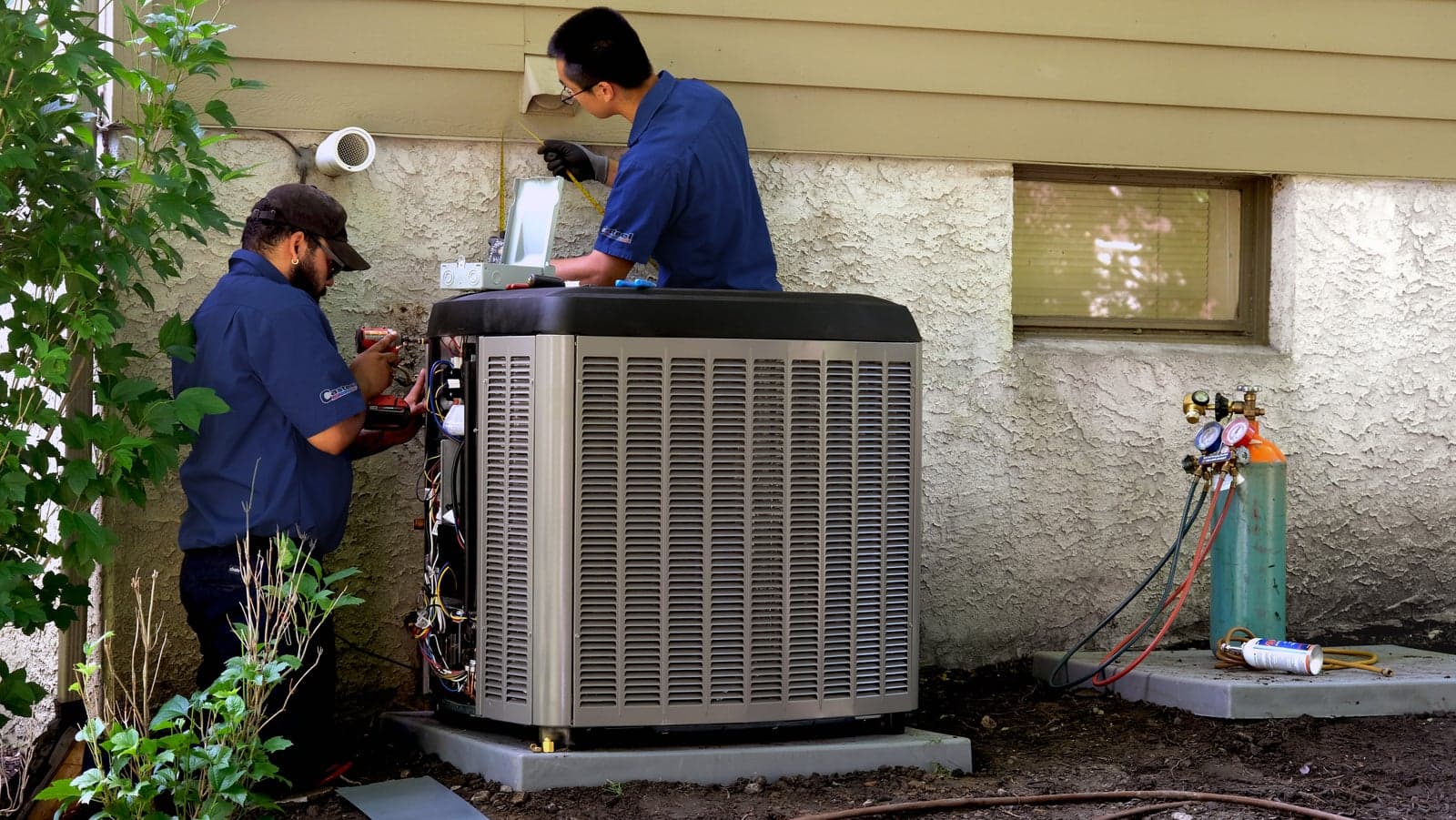
Quick answer: The federal 25C and 25D home energy tax credits are gone, terminated for property placed in service after December 31, 2025 under Public Law 119-21. If you are installing in 2026, do not plan around a federal credit. What still pays in Georgia is the utility layer, primarily Georgia Power's Home Energy Improvement Program, plus manufacturer promotions and whichever state-administered rebate program is currently accepting applications.
On this page:
Status at a glance
Expired: the federal tax credits
Still paying: Georgia Power
Georgia's state-administered rebates
Tankless water heaters and manufacturer offers
Where insurance fits, and what to document
FAQs
Homeowners routinely mix up three different things that behave nothing alike: a federal tax credit, a utility rebate and an insurance claim. They are paid by different parties, on different timelines, with completely different paperwork.
A tax credit comes off what you owe when you file. A utility rebate arrives as a check weeks after you apply. An insurance claim is a negotiation about damage that already happened. Knowing which one you are dealing with determines what you should be doing today.
Status at a Glance
Here is where each program stands as of the update date on this page.
Program | Status | What it means now |
Federal 25C, Energy Efficient Home Improvement Credit | EXPIRED | Not allowed for property placed in service after December 31, 2025 |
Federal 25D, Residential Clean Energy Credit | EXPIRED | Not allowed for expenditures made after December 31, 2025 |
Georgia Power Home Energy Improvement Program | ACTIVE | Rebates on qualifying measures, filed after installation on a short deadline |
Georgia Home Efficiency Rebates (HER) | OPEN | State administered by GEFA. Verify status before relying on it |
Georgia Home Electrification and Appliance Rebates (HEAR) | PAUSED | Project submissions paused until further notice as of September 2026 |
Manufacturer promotions | VARIES | Run independently of any government or utility program, seasonal |
Expired: The Federal 25C Tax Credit
The Energy Efficient Home Improvement Credit under Section 25C terminated for property placed in service after December 31, 2025, under Public Law 119-21.
The companion Residential Clean Energy Credit under Section 25D is also gone, and it uses a slightly different test. 25D is unavailable for expenditures made after that same date, and an expenditure counts as made when the original installation of the item is completed.
For anything installed in 2026, there is no federal credit to plan around. If a page is telling you a 25C credit is available for a 2026 heat pump install, that page is out of date, and there are a great many of them.
How 25C Worked, for Anyone Still Filing on a 2025 Install
If your equipment was placed in service on or before December 31, 2025, you may still be able to claim the credit on that tax year's return.
It was a credit against tax rather than a rebate, claimed for the year the equipment was placed in service, with annual caps that varied by equipment category. Heat pumps, heat pump water heaters and biomass stoves shared one annual limit that sat separately from the general improvement limit.
You will need the manufacturer's certification statement and the date the equipment was placed in service. Your tax professional is the right person to confirm eligibility and file it, and we are not.
If you installed with us in 2025 and need the model, serial and in-service date for your return, call 770-852-8504 and we will pull the job file.
Still Paying: Georgia Power's Home Energy Improvement Program
This is the program that matters for most metro Atlanta homeowners in 2026, and it is the one almost nobody explains properly.
Georgia Power runs a residential Home Energy Improvement Program with rebates on a list of qualifying measures. The HVAC-relevant categories include conversion to an air source heat pump, ductless mini split heat pumps, ground source heat pump conversion, heat pump water heaters, duct sealing and repair, air sealing, attic insulation, HVAC maintenance and tune-ups, home energy assessments and smart thermostats. There are also bundled options that combine several measures.
We are not publishing rebate amounts here, because they change and a stale number is worse than no number. Check the current values on the Georgia Power program page before you make a decision based on them.
The Three Conditions That Decide Whether You Actually Get Paid
The account. The improvement address needs active Georgia Power residential electric service. Your meter number goes on the application.
The deadline. This is the one that costs people money. Applications must be submitted within sixty days of the date on your paid-in-full invoice. Sixty days sounds generous until the invoice goes in a drawer in July and resurfaces in October.
The installer. Several measures require an affiliated Program Installer, and others require a licensed professional. Duct sealing, air sealing, home energy assessments and the bundles fall into the first category. Confirm your contractor's standing with the program before the work is scheduled, not after.
One more expectation to reset: a utility rebate of this type is normally paid to you by check after your application is approved, not deducted from what you owe your contractor. Budget the full installed cost up front and treat the rebate as a reimbursement that arrives later.
On the day your heat pump system or ductless mini split goes in, ask for the paid-in-full invoice, the model and serial numbers and the AHRI certificate before the truck leaves. That is the paperwork the application wants, and the clock has already started.
Georgia's State-Administered Home Energy Rebates
The federal Inflation Reduction Act created two home energy rebate programs, and the important thing to understand is that they are administered by each state rather than by the federal government. In Georgia that administrator is the Georgia Environmental Finance Authority.
Because they are state run, availability changes without much notice, and the two programs are not currently in the same position. As of September 2026, the Home Efficiency Rebates program remains open while HEAR project submissions are paused until further notice.
We are not going to publish income tiers, eligible measures or amounts for either one, because those are exactly the details that go stale on contractor pages and mislead people. Check the state's own site at energyrebates.georgia.gov before you count on either program, including if you read something different on a contractor page. Ours included, six months from now.
Tankless Water Heaters and Manufacturer Offers
The direct answer to whether a new tankless water heater is eligible for a tax credit in 2026 is no, not under the federal credit, because 25C has expired.
Check the utility layer instead. Tankless and high efficiency water heaters appear in some utility programs, and heat pump water heaters specifically are a named measure in the Georgia Power program.
Manufacturer promotions run on their own schedule and have nothing to do with either. They come and go seasonally and they are usually applied at the point of sale rather than filed for afterward, which makes them the easiest money in this entire article. Ask whether one is running when you get your quote.
Where Insurance Fits, and What to Document
Insurance is not a rebate, but it comes up in the same conversation often enough to belong here, usually after something has already failed. Your carrier is the authority on your policy and we are not going to pretend otherwise. What we can tell you is what to document, and when, because that window closes faster than people expect.
Water Heater Leak Damage
Most policies distinguish sudden and accidental discharge from gradual seepage, and that distinction usually decides the claim. A tank that fails and floods a room tends to be treated differently from a fitting that has been weeping for months. The equipment itself is commonly not covered while the resulting water damage often is.
Here is the part that matters. Before the old heater leaves your property, get photographs of the failure point, the installation date, the model and serial plate, and a written technician description of the failure mode.
Adjusters ask for exactly that, and it is close to impossible to produce once the unit is on a truck. We capture it as standard on every water heater replacement where there has been a leak.
Sewer Line Replacement
Usually not covered as a standard policy item, because damage to a buried lateral is commonly excluded. Many carriers sell a service line endorsement that does cover it, and any resulting interior damage may be handled separately from the pipe itself.
Ask your agent whether you carry that endorsement before you need it, because it cannot be added retroactively. A dated camera inspection recording is the evidence that supports any claim you do end up filing.
Electrical Panel Fire Damage
Fire is generally a covered peril under a standard policy, which is a different question from whether the panel itself is covered.
Where it gets complicated is a known-defective panel brand. Some carriers ask about Federal Pacific and Zinsco panels at underwriting, and a documented prior warning can affect how a claim is handled. If you have one of those panels, electrical panel replacement is worth pricing before your carrier raises it rather than after.
What We Can Do and What We Cannot
We can install equipment that qualifies for utility programs, hand you the paid invoice, model and serial details and certificates you need on the day of the install, and tell you which measures are on the current Georgia Power list.
We cannot file your tax return, approve a rebate, adjudicate an insurance claim, or promise you money from a program we do not administer. Any contractor who promises you a specific rebate outcome is promising something that is not theirs to give.
Why Choose Casteel in the Greater Atlanta Area
Casteel installs heating, cooling, plumbing and electrical systems across the greater Atlanta area, and we document the work properly because the paperwork is frequently worth as much to you as the workmanship.
With the federal credit gone, the practical question for most homeowners is how to spread the cost rather than how to claim it back, which is what our financing options are for. The Comfort360 membership covers the seasonal maintenance that keeps equipment warranties intact.
Call 770-852-8504 or request a free estimate.
Georgia HVAC Rebate FAQs
How does the 25C heat pump tax credit work?
The 25C Energy Efficient Home Improvement Credit terminated for property placed in service after December 31, 2025, under Public Law 119-21. For equipment placed in service on or before that date it was a credit against tax, claimed on that year's return with annual caps that varied by equipment category.
How do I claim the 25C tax credit for a new heat pump?
Only for a heat pump placed in service on or before December 31, 2025, because the credit has since expired. For a qualifying 2025 installation you claim it on that tax year's return using the manufacturer certification and the in-service date. Your tax professional should confirm eligibility and file it.
Are there Georgia Power rebates for HVAC upgrades?
Yes. Georgia Power runs a residential Home Energy Improvement Program with rebates on qualifying measures including air source heat pump conversions, ductless mini splits, heat pump water heaters, duct sealing and tune-ups. The address needs active residential service and the application deadline runs from your paid invoice date.
Does homeowners insurance cover water heater leak damage?
Most policies separate sudden and accidental discharge from gradual seepage, and that distinction decides the claim. The heater itself is usually not covered while the resulting water damage often is. Photograph the failure point and capture the model and serial plate before the old unit leaves your property.
Does homeowners insurance cover sewer line replacement?
Usually not under a standard policy, because damage to a buried lateral is commonly excluded. Many carriers sell a separate service line endorsement that does cover it, and interior damage may be handled differently from the pipe. Ask your agent whether you carry that endorsement before you need it.
Does homeowners insurance cover electrical panel fire damage?
Fire is generally a covered peril under a standard policy, which is a different question from whether the panel itself is covered. Known-defective brands complicate it, since some carriers ask about Federal Pacific and Zinsco panels at underwriting. Your carrier, not your electrician, is the authority here.
Related Articles
What do you need help with today?
Heating
No heat, strange smells, rising bills? We repair and replace heating systems to keep your home reliably warm.
Air Conditioning
AC blowing warm air? Uneven cooling in your rooms? We fix cooling issues fast and keep your system running smoothly all summer.
Plumbing
Our highly trained plumbers handle it all, from leaky faucets to full system installations and repipes.
Electrical
The smartest team in town. You need repair, installations, wiring, inspections, lighting — you name it.